Research
My research focuses on the dynamics of large-scale atmospheric circulation, particularly the coupling between the stratosphere and troposphere, and its influence on regional weather and climate. I combine observations, dynamical analysis, and physical and AI-based atmospheric models to understand the mechanisms behind weather extremes and their predictability.
Stratospheric dynamics and winter extremes
The winter stratosphere can influence surface weather through several dynamical pathways. While much attention has focused on the strength of the stratospheric polar vortex and sudden stratospheric warmings (SSWs), my research has highlighted the importance of stratospheric planetary wave structure for North American winter weather.
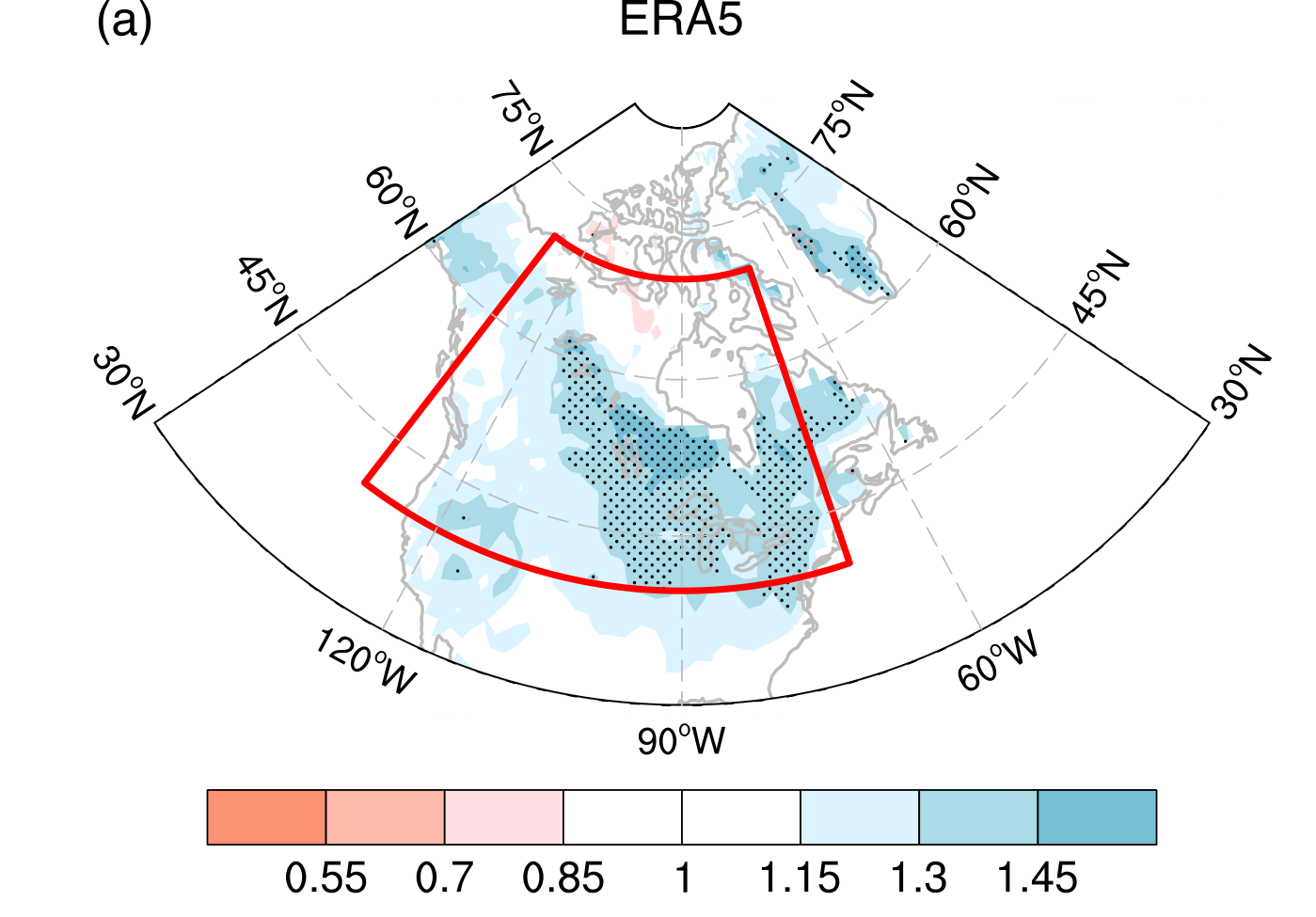
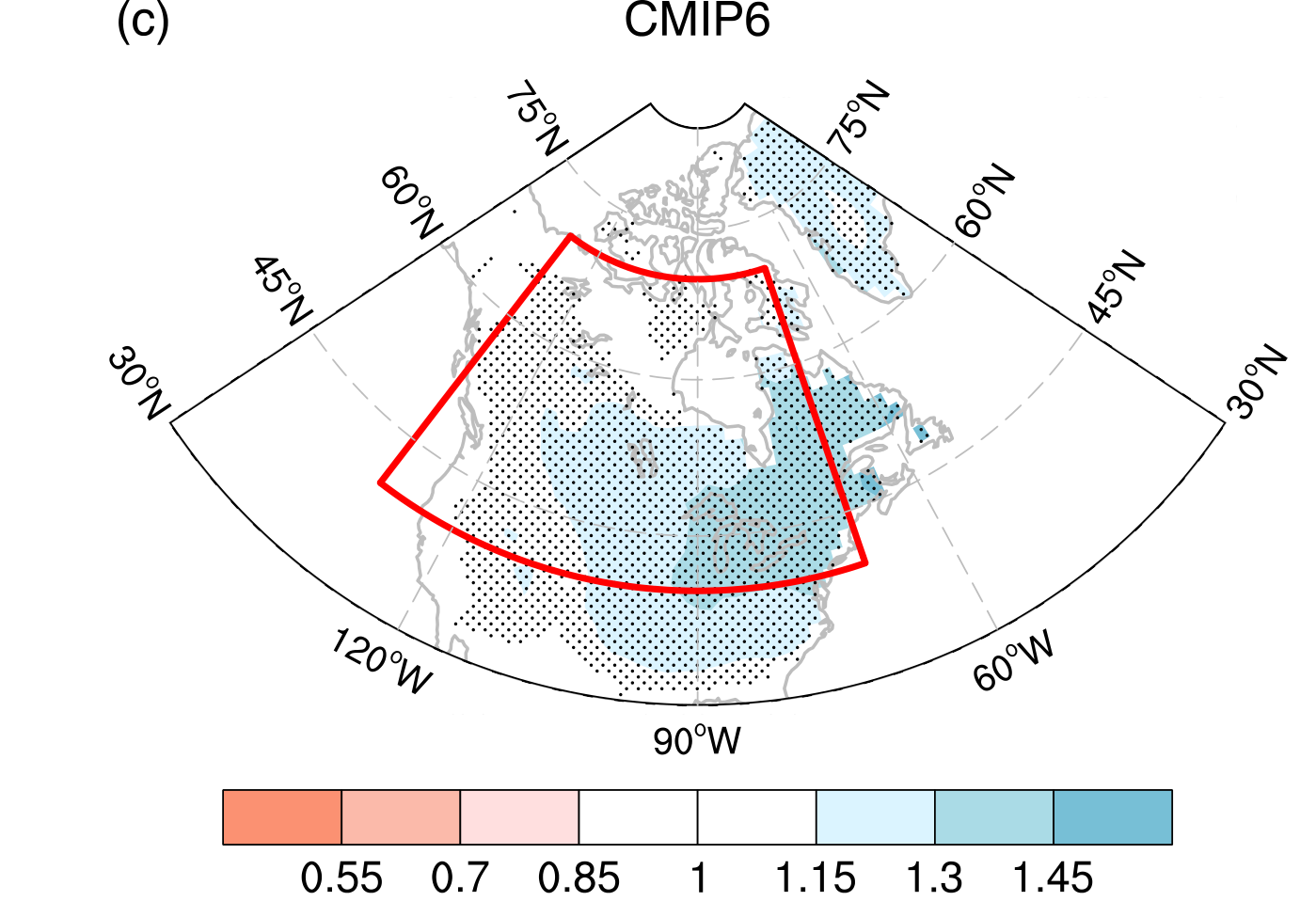
My earlier work identified distinct North American cooling patterns associated with the zonally symmetric and asymmetric modes of stratospheric variability. Building on this, we found that strong stratospheric wave events precede an increased likelihood of North American cold extremes 5–25 days later. Idealized model experiments support vertical wave coupling as an underlying mechanism. We further showed that this relationship depends on the background atmospheric state, particularly the phase of the quasi-biennial oscillation (QBO). Comparisons with climate models reveal biases in representing these wave structures and their surface influences.
Related papers: Ding et al. (2022), Geophysical Research Letters · Ding et al. (2023), Communications Earth & Environment · Ding et al. (2023), Journal of Geophysical Research: Atmospheres · Ding et al. (2024), Environmental Research: Climate
Subseasonal predictability and AI-based atmospheric experiments
The stratosphere provides a potential source of predictability beyond conventional weather forecast timescales. However, stratospheric anomalies do not always translate into improved surface forecasts.
In a 2026 Science Advances study, we identified a predictable planetary wave pattern in the lower stratosphere associated with North American cold extremes. Conditioning forecasts on this pattern improved second-week temperature prediction skill over parts of North America and revealed an elevated likelihood of cold extremes. These findings highlight the value of identifying particular stratospheric states that provide enhanced regional predictability.
I also adapt AI-based atmospheric models for controlled experiments investigating physical processes. In recent work with NeuralGCM, a hybrid AI–physics atmospheric model, we found that it struggles to predict SSWs but can reproduce key aspects of their downward influence when stratospheric evolution is corrected. This demonstrates the importance of evaluating AI-based models beyond conventional forecast metrics, using targeted experiments to identify opportunities to improve subseasonal prediction.
Related paper: Ding et al. (2026), Science Advances
Atmospheric circulation and regional climate variability
Global warming is not spatially uniform. Regional temperature trends reflect the combined effects of external climate forcing and internal variability.
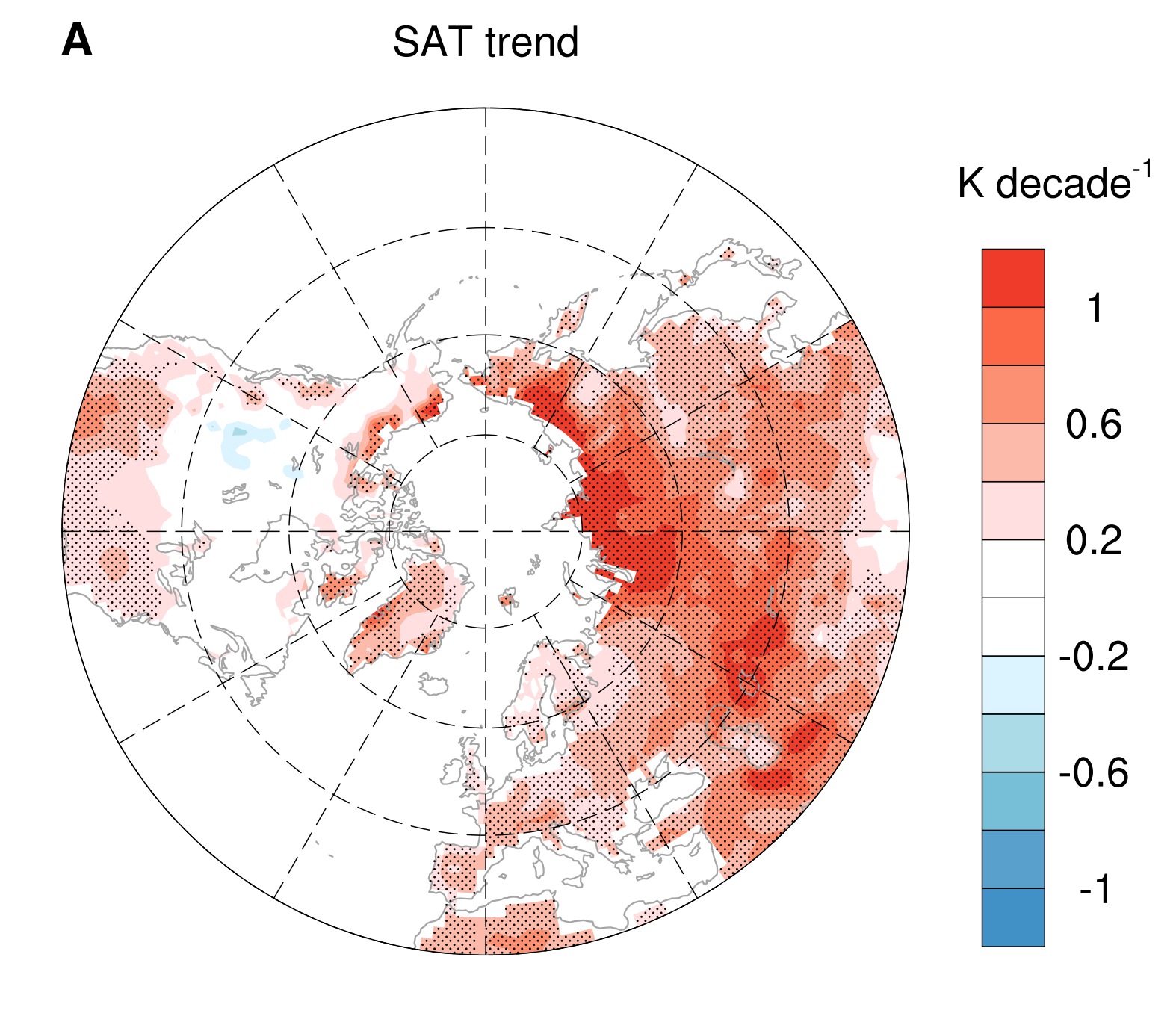
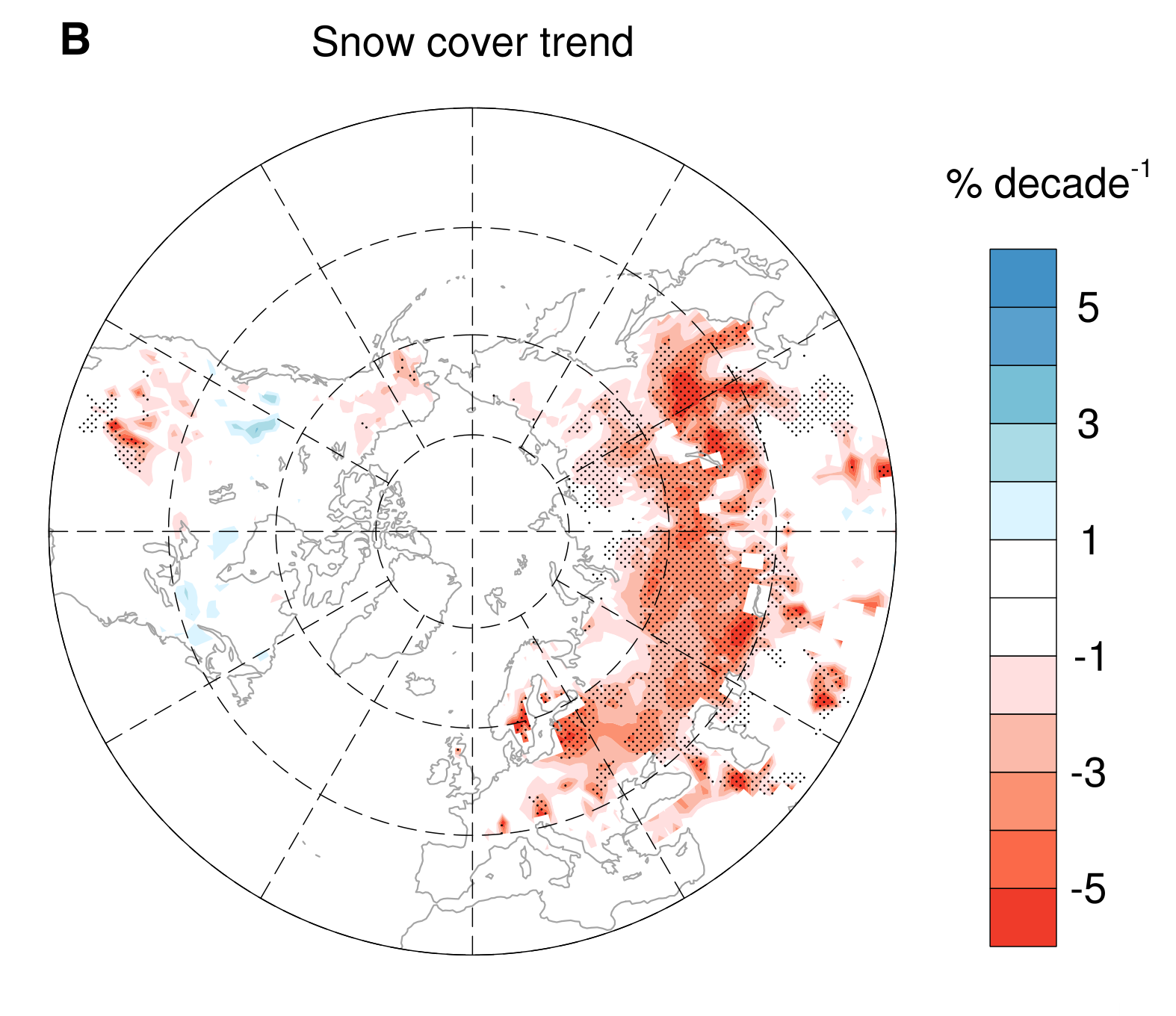
In our 2025 Science Advances study, we investigated why Eurasia warmed approximately three times faster than North America during spring over 1979–2021, accompanied by contrasting changes in snow cover. Using observations and large ensembles of climate-model simulations, we identified contributions from tropical Pacific variability and anthropogenic aerosols, both associated with large-scale circulation changes across the Pacific–North American sector. The results illustrate how atmospheric dynamics mediate regional climate changes.
Related paper: Ding et al. (2025), Science Advances